Every flight starts and ends on the ground, waiting through delays between door closed and start of push, tug connection, pushback, disconnection, jet blast and ingestion prevention, engine start, clearances and ground crew. Those minutes cost airlines time, money and, too often, damaged aircraft.
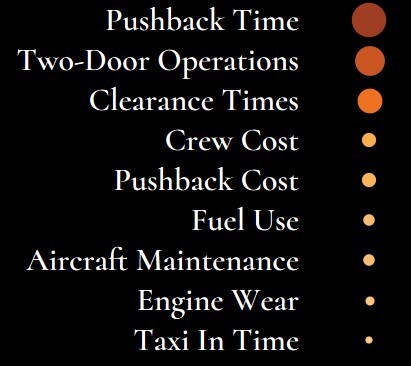
Average time lost to delays between door closed and start of push, tug connection, pushback, disconnection, jet blast and ingestion prevention, engine start, clearances and ground crew. WheelTug® gets it back.2
Why ground time matters ↓Scheduled gate-to-gate time on the same 1,286 US city-pairs, up from about 102.5–106.5 min in 1969–78. Time in the air barely moved: 96 min (1995), 97 min (2025).1
Scheduled Time report ↗The average rate of ground collisions involving commercial aircraft. 1,126 publicly reported ground collisions, 2004–2026, are catalogued.3
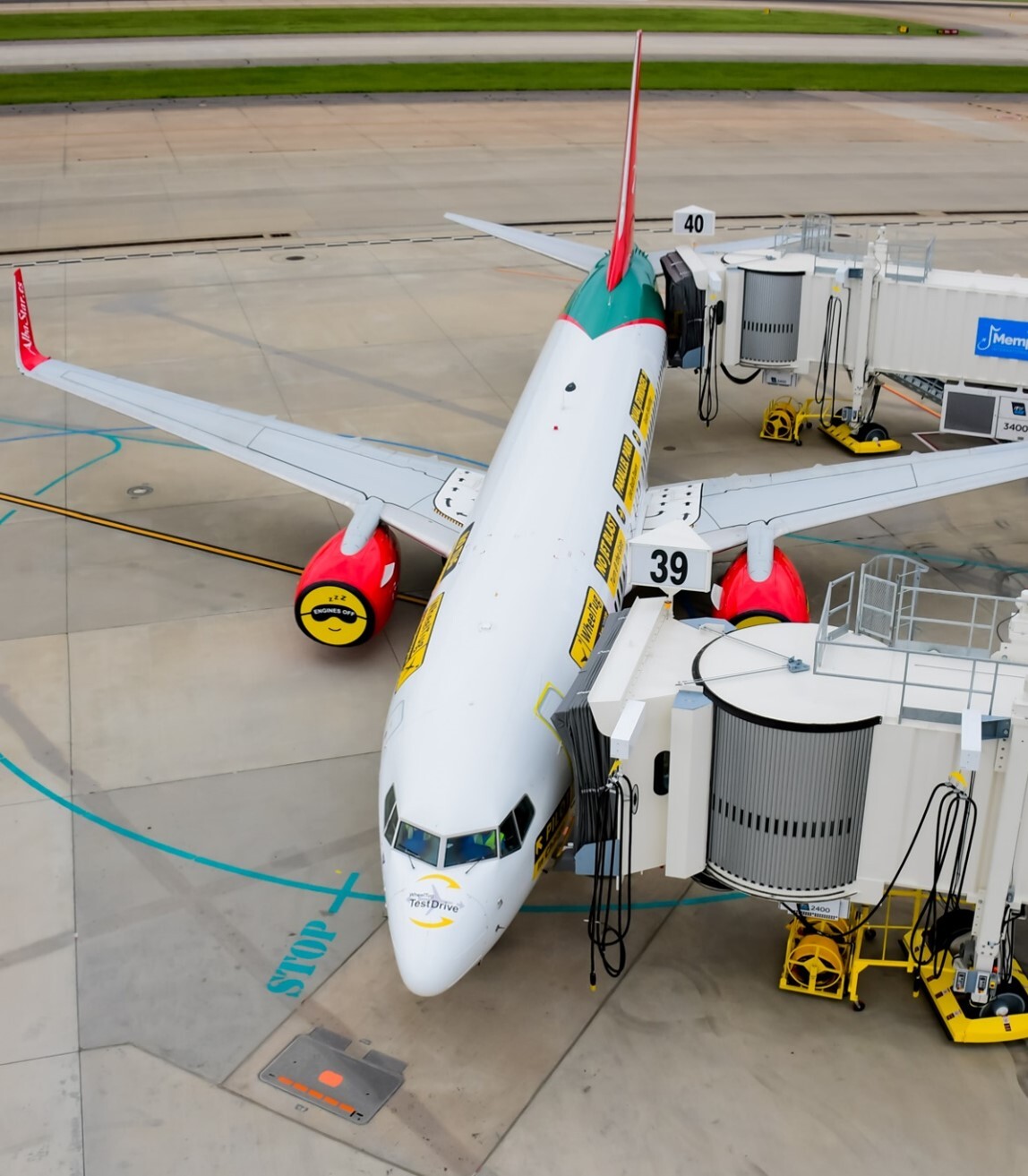
Ground Collisions report ↗No tug. No tow bar. No engines running to taxi. The pilot drives the aircraft.
No waiting through delays between door closed and start of push, tug connection, pushback, disconnection, jet blast and ingestion prevention, engine start, clearances and ground crew. WheelTug saves 7 min/flight on average, 20 min/flight with two-door operations, and hundreds of hours a year per aircraft.2
Ground time ↓Scheduled (Block) Time on the same 1,286 US city-pairs grew by 26.5 min since 1969, and the extra published time is time on the ground.1 That is the time WheelTug saves: 7 min/flight on average, 20 min/flight with two-door operations.2
Scheduled time ↓The pilot backs the aircraft out under its own power, with WheelTug Vision cameras showing the wingtips, the nose gear and the surroundings. The Ground Collisions report catalogues 794 incidents WheelTug and WheelTug Vision would have reduced or avoided (WheelTug’s assessment), including 161 + 80 + 39 caused by tug/pushback drivers, wing-walker/towing crews and tow bars. Each one cost a median 4 days out of service.3
Ground collisions ↓In-Wheel Electric Motors for Commercial Aircraft
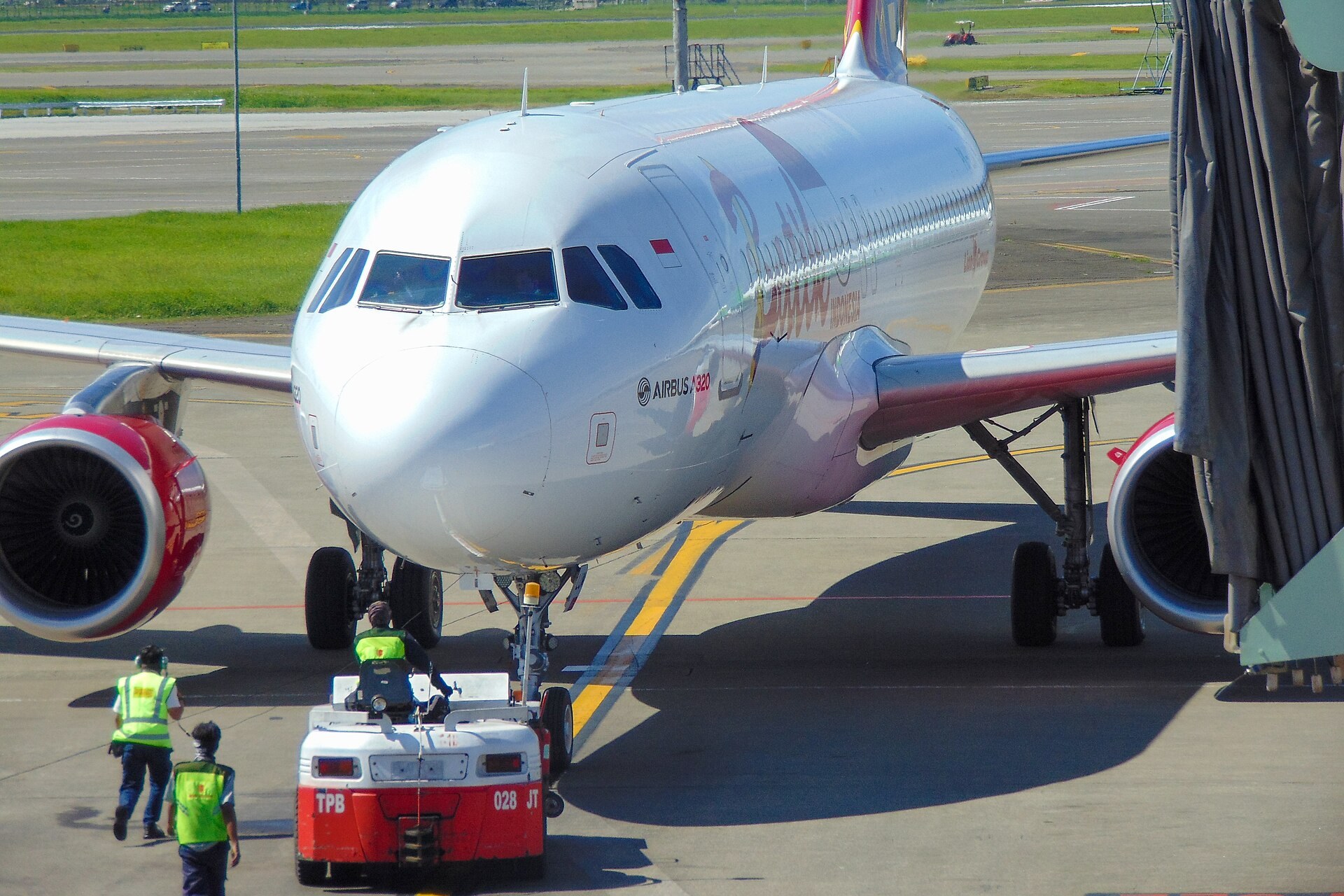
Before a conventional aircraft can move, it needs a tug and tow bar, a pushback crew and wingmen, an engine start clearance, and its jet engines running just to taxi. Every handoff is a delay.

5 ground crew + tug + tow bar — tug driver, headset operator, two wing walkers, tail walker; the pilots wait in the cockpit.6
No tug. No tow bar. The pilots back the aircraft out using electric motors in the nose wheels. WheelTug says this eliminates delays between door closed and start of push, tug connection, pushback, disconnection, jet blast and ingestion prevention, engine start, clearances and ground crew.2
Jets cruise at about the same speed as in 1967 (Mach 0.76–0.80), yet airlines keep padding their Scheduled (Block) Times. The extra minutes aren’t in the air. They’re on the ground.1
Analysis of about 226 million flight records (BTS On-Time Performance, published airline timetables).1
Air time is flat.
Scheduled time keeps growing.

Pushback, towing, taxi, jet blast and FOD incidents damage aircraft, injure ramp workers and take aircraft out of service for days or months.
Incidents per category, of the 794 incidents WheelTug or WheelTug Vision would have reduced or avoided (sub-categories shown; Twist is a tag on incidents counted above). Source: collisions.wheeltug.com.3
WheelTug
In-Wheel Electric Motors for Commercial Aircraft
WheelTug is a pilot-controlled electric nose-wheel drive: the aircraft pushes back and taxis without a tug or tow bar, with main engines off. WheelTug Vision adds cameras showing wingtips, the nose gear and the aircraft's surroundings.3
With WheelTug, responsibility for pushback (‘wheelback’) shifts from ground handling staff to the flight crew, and no pushback tug or tow bar is needed.9
The pilot backs the aircraft off the gate under its own electric power. No tug, no tow bar, no pushback crew to wait for.
The aircraft taxis on WheelTug’s in-wheel motors, so jet engines aren’t needed to drive on the ground.
WheelTug Vision cameras show the wingtips, the nose gear and the aircraft’s surroundings to the flight crew.
The Average time WheelTug can save by eliminating delays between door closed and start of push, tug connection, pushback, disconnection, jet blast and ingestion prevention, engine start, clearances and ground crew (with optional backup camera).
That's what WheelTug can save with two-door operations, which should be most easily adopted in Asia, and adopted over time elsewhere.
WheelTug saves hundreds of hours a year per aircraft.
That is how much WheelTug can save the airlines who have already signed up. Beyond time savings, there are also carbon benefits, fuel savings, engine savings and more...
Pushback, towing, taxi, jet blast and FOD incidents, and how WheelTug and WheelTug Vision could have helped.
Open the Ground Collisions report ↗Global scheduled time on matched routes, 1960–2026, from about 226 million flight records.
Open the Scheduled Time report ↗We have over 2,000 aircraft in our backlog. Prominent airlines include Vueling and IndiGo. WheelTug has LOIs with airlines in Europe, Asia, India, Africa and North and South America.
Learn moreOur Leadership Team includes senior engineers and executives from Embraer, Lockheed Martin, HondaJet and Czech Airlines. Our Advisory Board is even more impressive.
Learn moreOur engineering and quality plans have been accepted by the FAA. We are well on our way to achieving certification and manufacturing approval.
Learn moreWe have a 36,000 sq ft. plant ready for all of our assembly operations. At the same time, our partners have readied sufficient capacity for their component manufacturing efforts.
Learn moreWheelTug has been covered across the aerospace industry, from Flight International and Ground Handling International to a guest appearance on Squawk Box!
Learn moreWheelTug has partnered with numerous airports to develop best practices to maximize the benefit of WheelTug.
Learn more